Topic:
Mental Health
Year:
05 December 2025

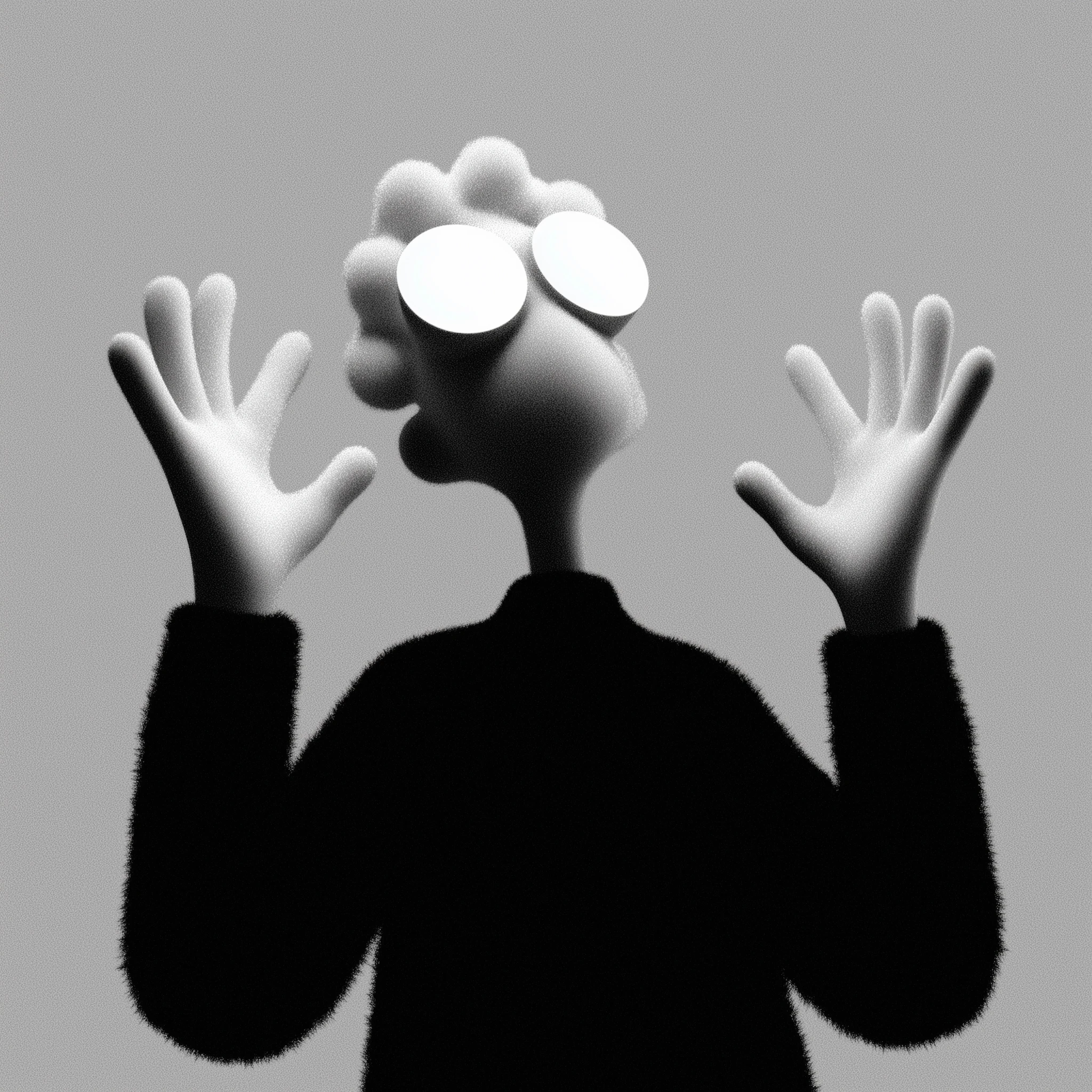
Imposter syndrome is basically the unpaid internship that never ends. If you’re a creative and you don’t have it, congratulations, you’re either a psychopath or you’ve stopped giving a shit entirely. For the rest of us, it’s there most days, usually right after you see someone else’s work and immediately question your entire career.
I deal with it constantly. One minute you’re feeling decent about what you’re doing, the next you’re scrolling and thinking, how the fuck did they make that and why am I even here. Designers, art directors, pain in the arse door-to-door sales reps, it doesn’t matter. There’s always someone doing work that makes you feel like an amateur with a laptop and a dream.
Personally, I feel the frustrating part is that imposter syndrome isn’t all bad. In small doses, it’s actually useful. It keeps you sharp. It makes you want to improve instead of settling. Ira Glass talks about the gap between your taste and your ability, where you know what good looks like but you’re not quite there yet. That gap feels awful, but it’s also the reason you get better. If you didn’t have that voice in your head, you’d probably be producing very confident, very average work, which might be worse.

The problem is when it takes over. When every project feels like a test you’re about to fail. When you assume everyone else knows what they’re doing and you’re just blagging it. When taking a break feels like you’re falling behind, and not creating feels illegal. That’s when imposter syndrome stops being motivating and starts fucking with your mental health. Creatives are especially bad at this because work isn’t just work. It’s tied up in identity. If the work feels shit, you feel shit. And switching off is hard when your brain won’t shut up and keeps telling you that resting means you’re bone-bloody idle or irrelevant.
Maya Angelou once said that even after publishing eleven books, she still worried people would realise she was a fraud. If one of the greatest writers of all time felt like that, the rest of us are probably allowed to struggle too.
For me, the only way to deal with imposter syndrome is balance. Use it to push yourself, but don’t let it run the show. Take time off. Do things that have nothing to do with work. Be shit at something else for a change. Touch some grass. Laugh at other peoples misfortunes on Love is Blind. Constant comparison and constant output is a fast way to burn out and hate the thing you once loved.
Imposter syndrome doesn’t really go away. You just learn not to believe everything it tells you. And most of the time, it’s talking absolute tripe.
Other articles
S.1